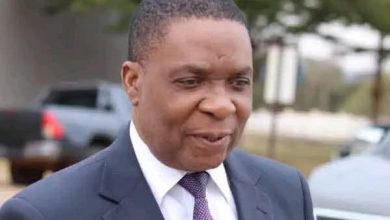
In an apparent bid to champion policy direction, President Peter Mutharika’s administration has overhauled executive management in State-owned enterprises (SOEs) amid pundits’ sentiments that the exercise, while legal, could undermine governance.
During the past three months, the administration has replaced chief executive officers (CEOs) and directors general (DGs) in various SOEs and parastatals.
Those replaced have either been seconded to public institutions of higher learning, fired after disciplinary hearings or answering some court cases.
The move has drawn criticism from accountability, governance and political pundits who have argued that while legally permissible, opaque and non-competitive appointments fundamentally undermine good governance.
Notable appointments
In the latest appointments, Rhoda Gadama Misomali is now CEO at National Youth Council of Malawi (Nycom) while Yeremiah Chihana now heads financially-struggling Blantyre Water Board (BWB), Chris Chaima Banda is at Cannabis Regulatory Authority (CRA) and William Kaipa at Electricity Supply Corporation of Malawi (Escom).
Malawi Communications Regulatory Authority (Macra) now has information technology expert Mayamiko Nkoloma as DG while Engineer Emmanuel Matapa has taken over at National Oil Company of Malawi and Henry Shamu is back at Malawi Posts Corporation (MPC) as Postmaster General. Media specialist Fergus Lipenga is now DG at Malawi Digital Broadcasting Network Limited .
Other appointments include Engineer William Liabunya who is back at Electricity Generation Company while Symon Mandala is at Malawi Bureau of Standards. Lawyer Felix Tambulasi is Commissioner General at Malawi Revenue Authority, Kayisi Sadala is at Malawi Entreprise Development Fund, formerly National Economic Empowerment Fund and Brian Banda is new DG for Malawi Broadcasting Corporation.
Corporate governance at stake
In an interview with The Nation, a former corporate executive privy to management of SOEs and parastatals yesterday stated that boards are supposed to follow all due processes before making appointments.
Said the executive: “These are public institutions and, therefore, every Malawian is supposed to be given a chance to compete. You cannot just handpick someone without advertising! People need to apply, undergo interviews!
“That is why such appointments have been subject to investigations by the Ombudsman in the past. Every executive management position has to undergo that process.”
Private practice lawyer Benedicto Kondowe, in a separate interview, said that while legally permissible, opaque and non-competitive appointments fundamentally undermine good governance.
He said: “Without transparent, merit-based processes, these changes risk being viewed as political patronage, eroding public trust and ultimately compromising the very reforms they are meant to achieve.
“Transparency is not optional; it is central to legitimacy and institutional integrity. Where due process is bypassed, it weakens both the appointees’ authority and the credibility.”
On his part, Centre for Social Accountability and Transparency executive director Willy Kambwandira said without transparency and adherence to governance standards, these changes risk entrenching the very problems they purport to solve.
“This is abuse of executive powers, and sets a dangerous precedent that public offices are rewards rather than responsibilities grounded in professionalism and integrity,” he said.
Kambwandira called on the Ombudsman to investigate the appointments and take necessary steps including clear administrative sanctions against authorities responsible.
Consumers Association of Malawi executive director John Kapito said the Democratic Progressive Party leadership should be aware of how some appointees hired during its previous tenure were removed from high positions because of employment irregularities when the party left office in 2020.
“The State President [Peter Mutharika] does not condone corruption in whatever shape and illegal recruitments are the worst form of corruption that must not be condoned,” he fumed.
University of Malawi Associate Professor of Administrative Studies Boniface Dulani said the arrangement has become common in recent years, resulting in some parastatal bodies being saddled with as many as three or four CEOs on their payroll.
He said: “By placing partisans that have zero experience in running organisations, there is a real risk of demoralising long serving professionals in the organisations, further undermining performance.
“Indeed, with political leadership in place, the long serving individuals can easily manipulate the new leadership and further weaken parastatals that are already performing poorly anyway.”
Boards justify, govt silent
In announcing the appointment of Kaipa at Escom, board chairperson Alfred Nhlema said a targeted executive search approach was both necessary and in the best interest of the nation to turn around the power situation at Escom.
“Accordingly, the board has exercised its governance discretion, within applicable legal and policy frameworks, to identify and secure a candidate of exceptional calibre with a proven ability to deliver immediate impact at scale,” he said.
Comptroller of Statutory Corporations Stuart Ligomeka, who doubles as Deputy Chief Secretary in the Office of the President and Cabinet, said he was “chairing meeting” and would revert. However, by press time at 9pm he had not yet come back to The Nation.
Many parastatals struggling
In January, former Postmaster General Angel Banda told the Media, Information and Communication Committee of Parliament in Lilongwe that MPC requires K17.8 billion to implement a turnaround strategy.
On the other hand, the Malawi Government Annual Economic Report 2026 shows that between 2024 and March 2026, net losses for BWB declined sharply from a deficit of K37.8 billion in 2024 to K10.2 billion in 2025.
Pundits have cited Executive interference in the operations of SOEs, including in the recruitment of executive management and boards of directors as well as influencing award of contracts to cronies and associates of politicians in power as some factors sinking the entities.